
CloverPit
When CloverPit was announced, I assumed it would be just another casino-style game trying to lure players in and, eventually, their real money. Because of that assumption, I deliberately ignored it and chose not to cover it at all. It didn't feel appropriate.
That assumption turned out to be completely wrong.
Yes, CloverPit can be addictive - I've played it now - but it's not because it's chasing real-world gambling mechanics. Instead, it offers multiple strategic angles for increasing your winnings while managing an ever-escalating series of deadlines. It's far more tactical, and far more deliberate, than it first appears.
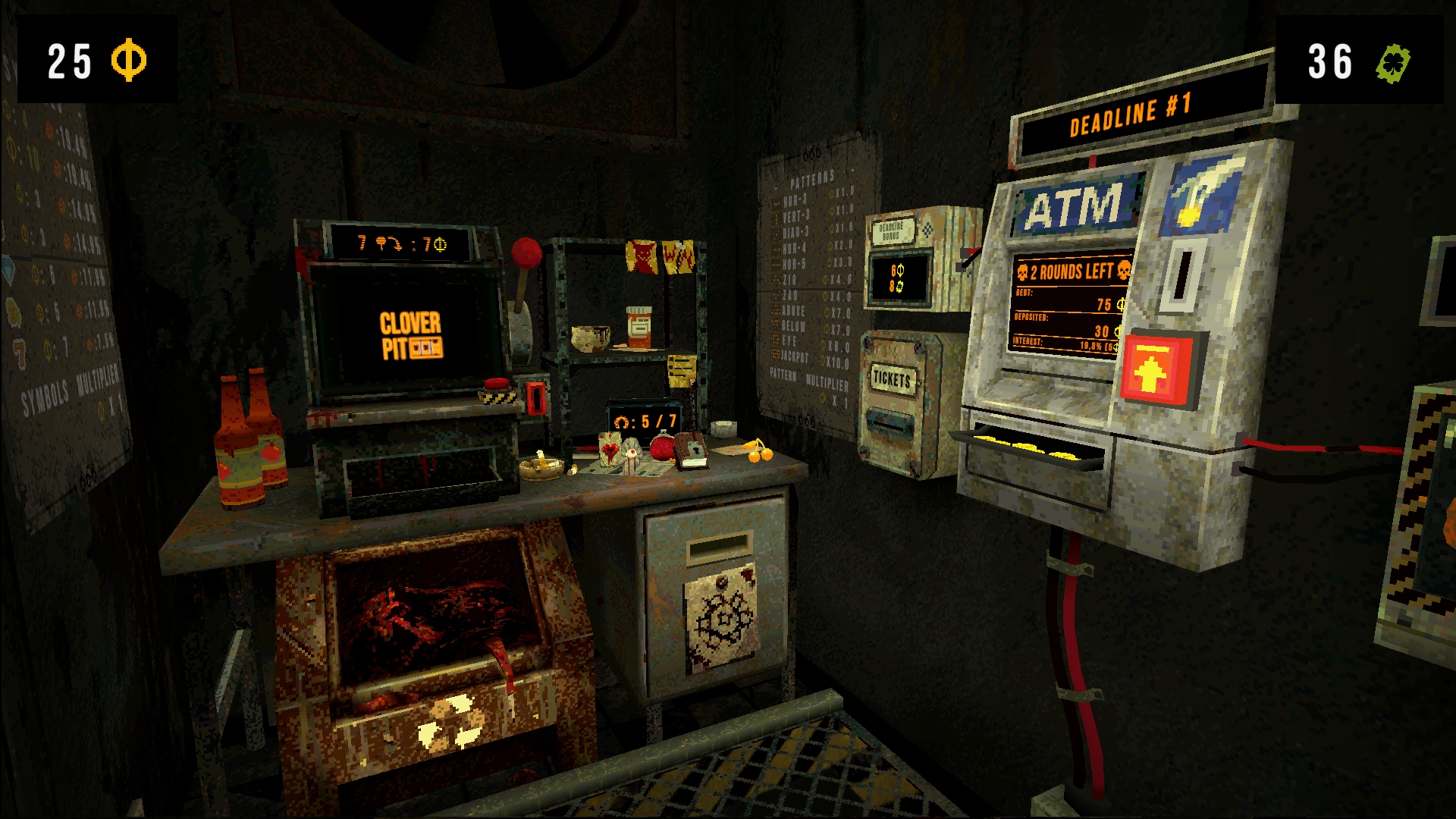
A strange situation, intentionally unclear
From playing the game myself and watching others play it, I get the impression that CloverPit is deliberately vague about why you're here.
Either you've been kidnapped and forced to play to avoid death, or you're a hardcore gambling addict trapped in a self-inflicted loop of endless play. You can choose whichever interpretation you prefer. Somewhere, there's clearly someone watching - a "big brother" presence making sure you keep earning money for someone else.
You're in debt. That much is obvious. What isn't clear is whether the debt existed before you arrived, or whether it grows as a result of playing. Are you here to pay it off, or are you digging yourself deeper with every spin? The game never answers this directly, and that ambiguity feels intentional.
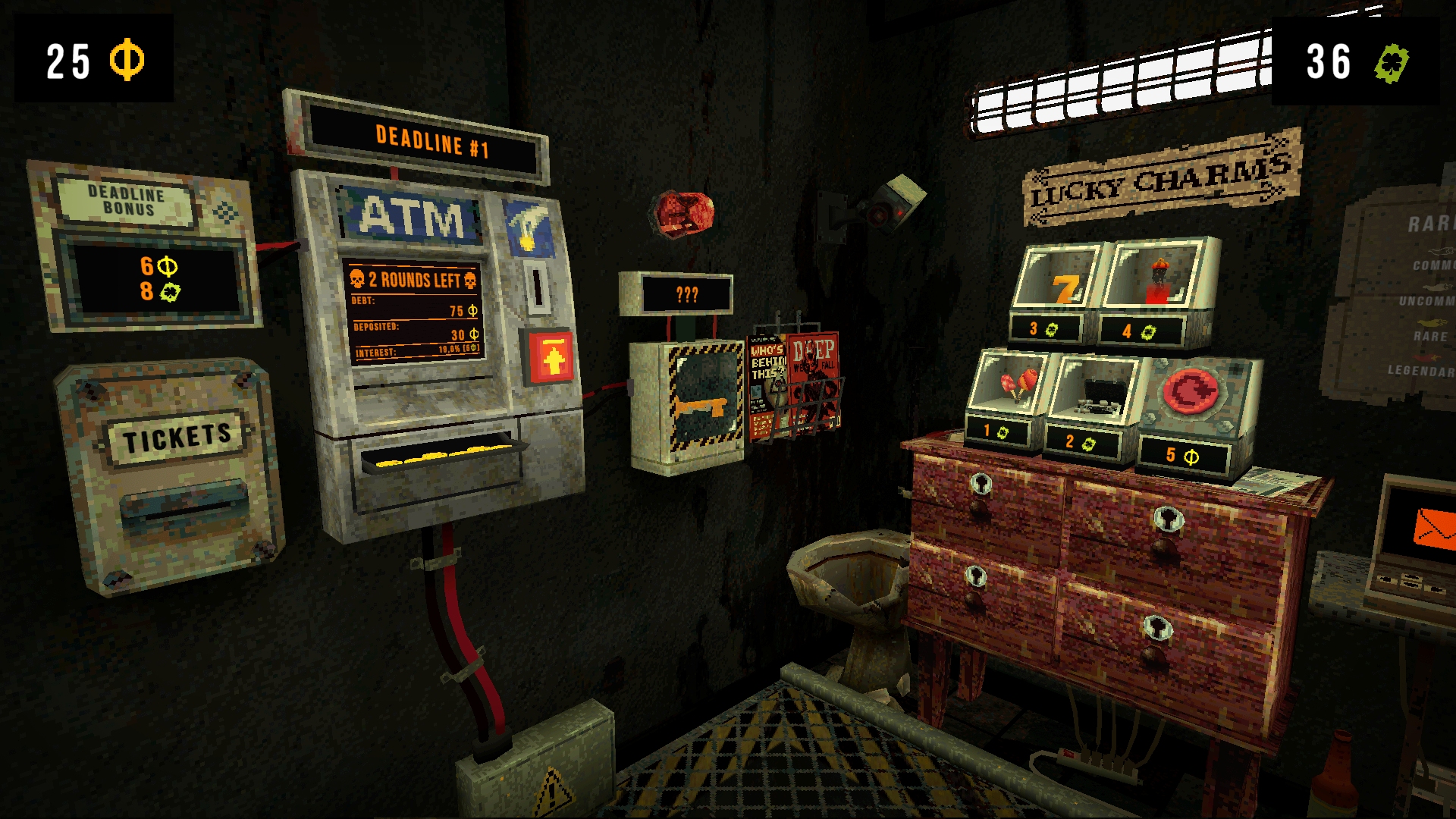
The cell and its tools
You're placed in a small jail-like cell - with no bed, which already feels unfair. What you do have is a slot machine, an Atm-like deposit system where you can earn interest and pay off debt, a ticket machine, a telephone, drawers, a charm shop that modifies gameplay, and even a toilet that can enable additional item interactions.
This space becomes your entire world.
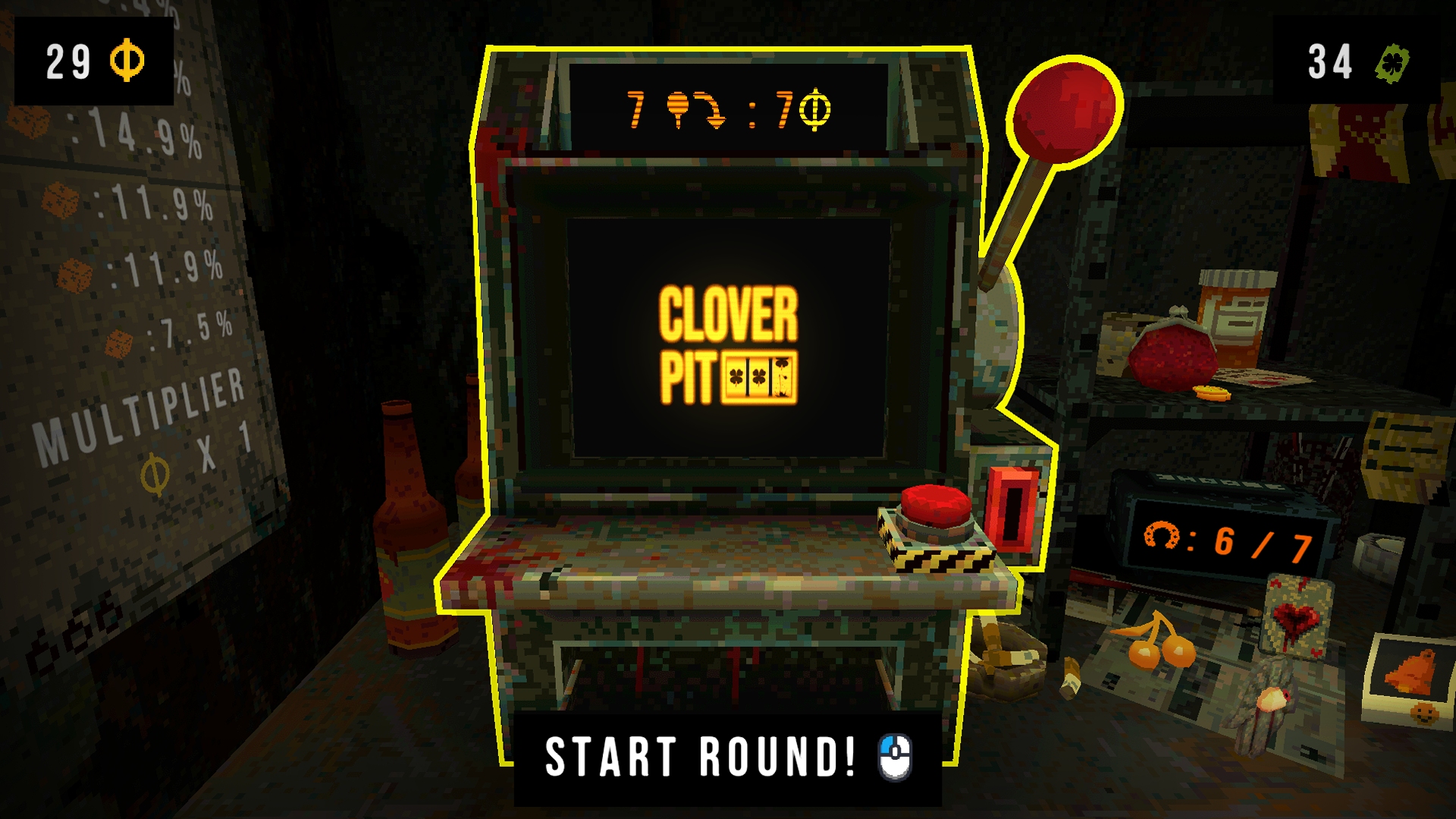
Deadlines and decision-making
The core loop is simple in theory: you play the slot machine using coins or credits, trying to meet a required deadline within three rounds of play. Before each round, you must decide whether to take three or seven spins.
That decision is more important than it sounds. It affects how many tickets you earn, how much risk you're taking, and whether more spins actually benefit your current setup. More spins are not always better.
Each completed deadline increases the next one dramatically. You start at 75 coins, then 200, then 666, then 2000, 12,000, 33,333, and so on. The pressure ramps up fast.
The 666 deadline introduces one of the game's cruelest mechanics: hitting 666 in the center of the slot machine doesn't reward you - it wipes out all earnings for that round.
The first time this happened to me, I had just earned over 17,000 coins thanks to a strong charm setup and pure luck. The very next spin hit 666 and erased everything. With my next deadline set absurdly high, the run was effectively over. That moment hurt - and it's one of the clearest examples of how CloverPit weaponizes emotional whiplash.
If there were a way to completely disable the 666 mechanic, I suspect I'd be dangerously stuck playing this game even more than I already am.
Failure has consequences
Missing a deadline isn't a gentle reset. The floor opens beneath you, and you fall to your death.
It's easy to imagine real-world gamblers feeling something disturbingly similar after a catastrophic loss. CloverPit captures that emotional drop remarkably well - the shock, the finality, the sudden emptiness. The difference, of course, is that CloverPit is just a game. No real money is lost. The danger is simulated.
That distinction matters.
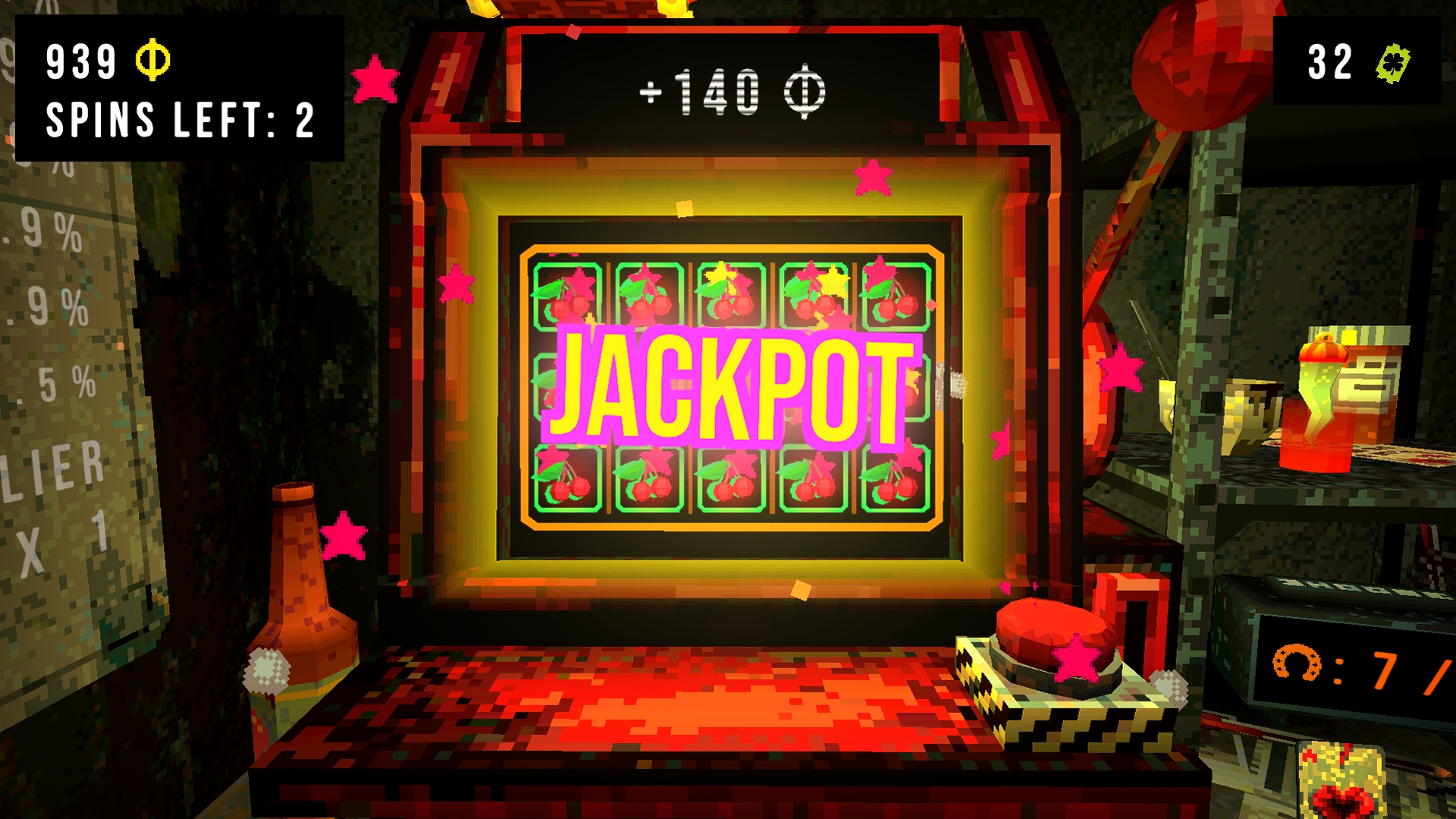
From chaos to comprehension
At first, CloverPit feels like pure randomness. You will lose a lot while learning.
Over time, charms, modifiers, symbol interactions, and permanent upgrades slowly turn chaos into something you can reason about. The charms and traits system doesn't just add numbers - it reshapes how the slot machine behaves.
Some effects are immediately obvious. Others are subtle, even opaque. A charm might permanently increase one symbol while quietly making another rarer. Another might double a payout but introduce a delayed downside you won't feel until several rounds later.
Understanding this takes time, patience, and failure.
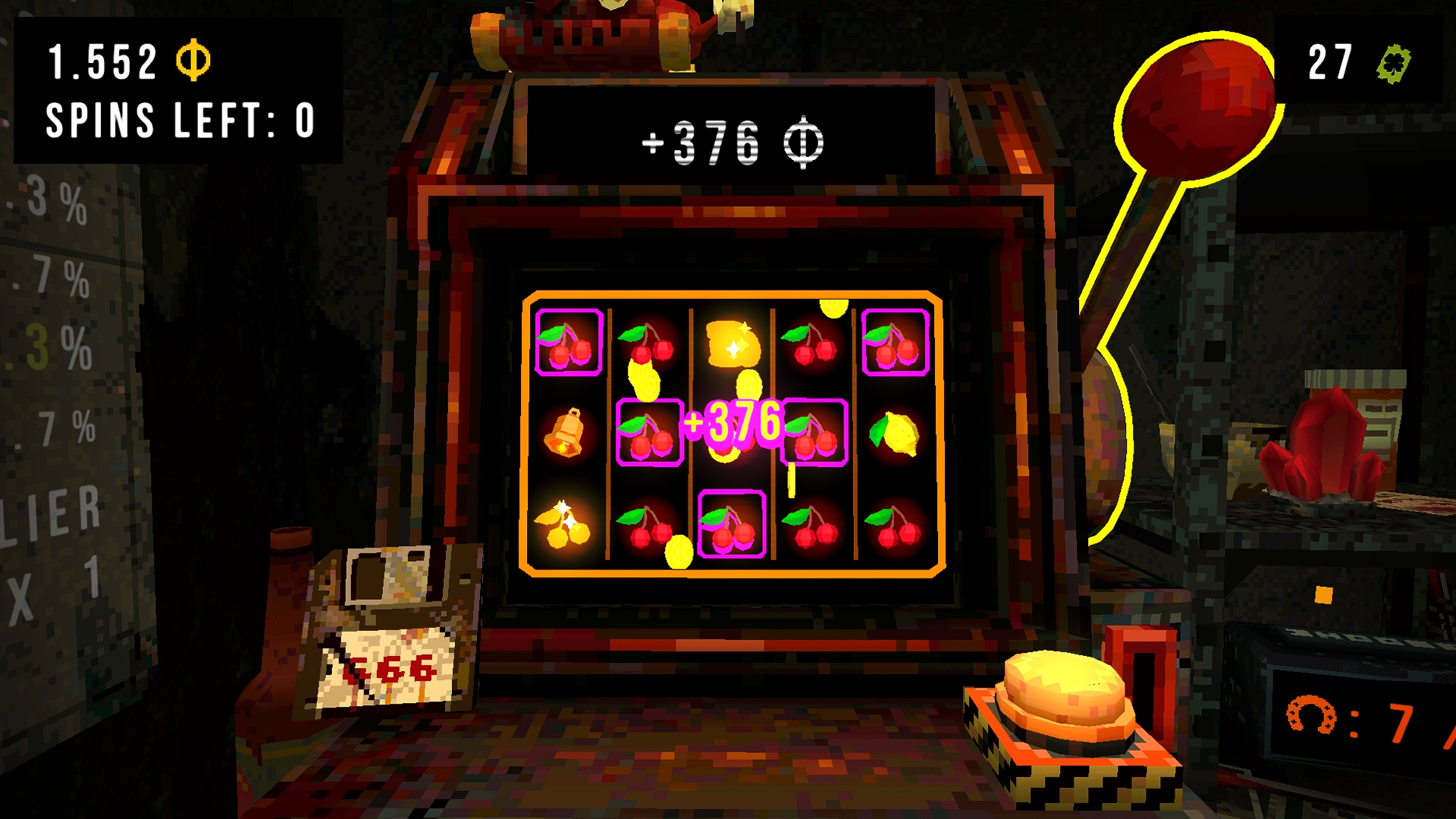
Pressure as atmosphere
On top of everything else, you're constantly racing against the deadline. The floor shifts at regular intervals, a blunt reminder that your life is on the line. Mechanical noises, a deep continuous bass, and long stretches without silence create constant tension. It can be genuinely stressful.
At the same time, it remains engaging - even fun - though deeply unforgiving when luck refuses to cooperate. Success in CloverPit isn't about chasing massive wins. It's about risk shaping. You're not trying to win big; you're trying to bend probability just enough to survive.
Occasionally, you do win big - and when that happens, the next deadline grows even larger, dragging you straight back into danger.
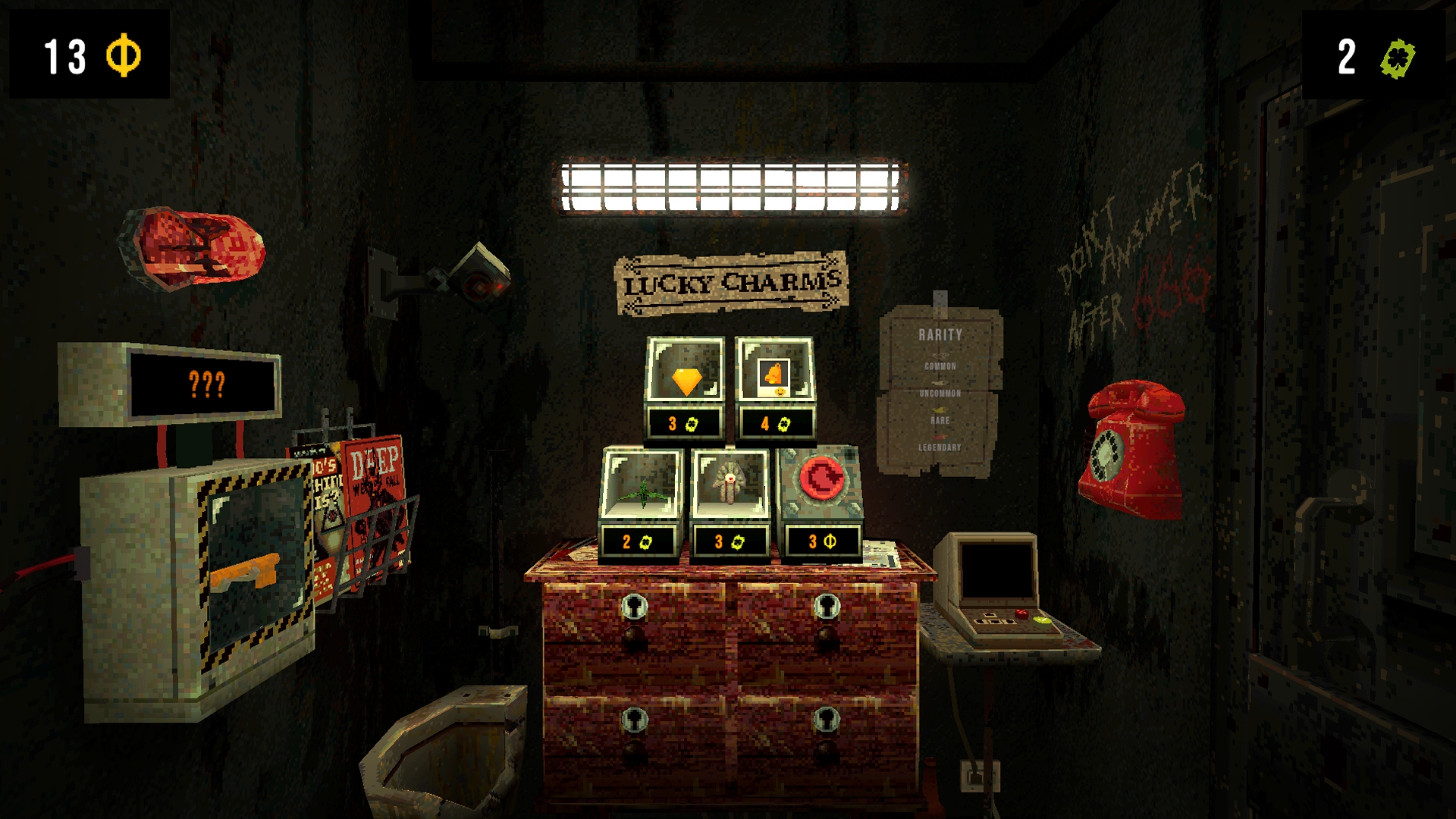
Repetition with intent
CloverPit is grim, enclosed, and intentionally repetitive. The cell barely changes. The slot machine becomes your entire world.
That repetition is deliberate. It reinforces the theme of routine under constant threat. The sound design - mechanical clicks, harsh spins, and uncomfortable silences - does much of the storytelling. The game rarely tells you that you're under pressure. It lets rhythm and repetition do that work instead.
Guidance without hand-holding
The beginner guidance provided for previews and testing is surprisingly good, helping prevent CloverPit from feeling impossible early on. The advice focuses on smart risk management rather than brute-force luck, encouraging players to restart runs without frustration and to experiment with charm synergies.
Conclusion
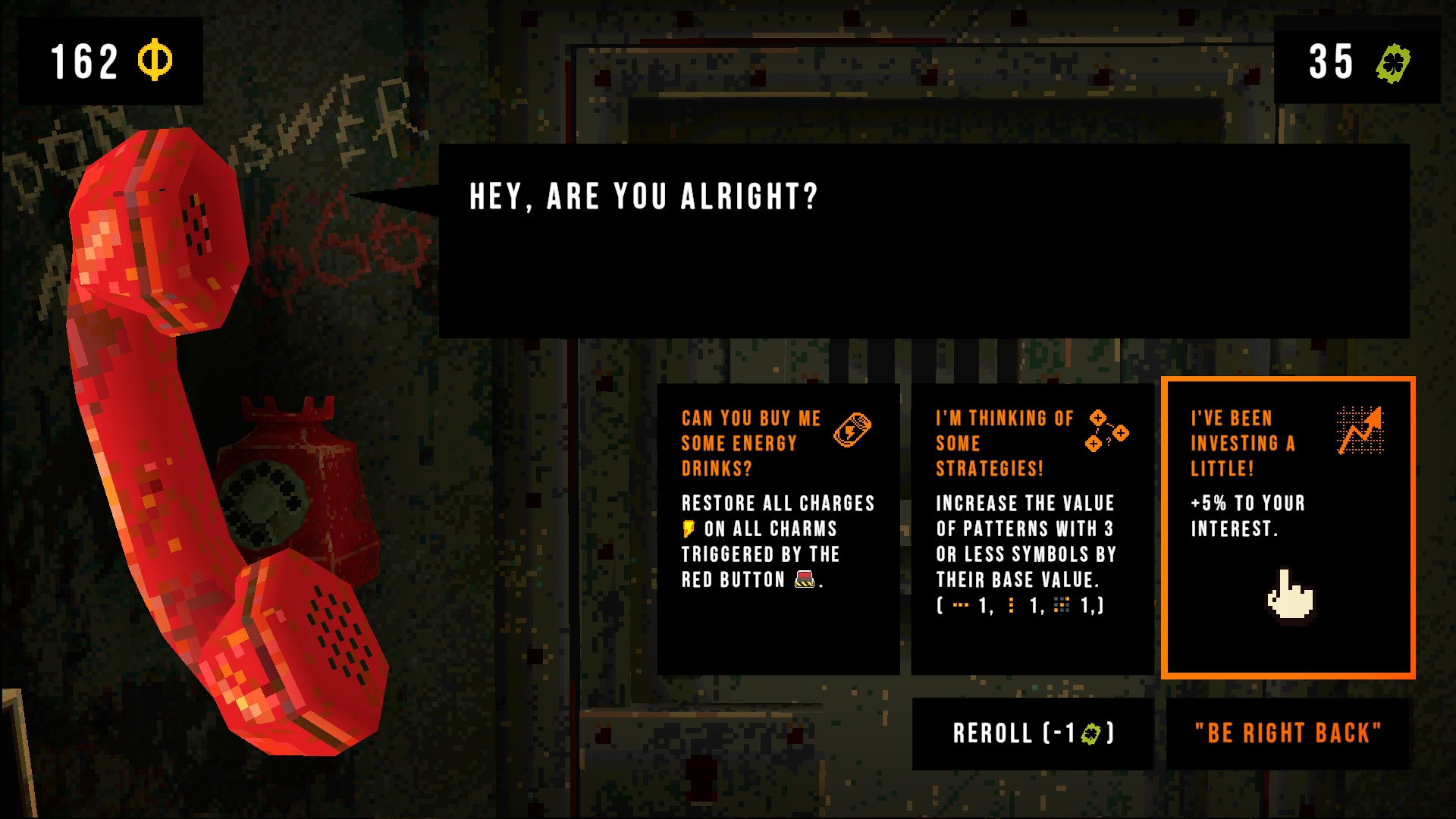
CloverPit is a highly tactical game that demands focus and understanding. You need strong charm combinations, well-timed phone modifiers, and yes - some luck. Like all Rng-based systems, randomness plays a role, but it's far from mindless.
With the right setup, the game allows for absurdly large wins. Some players have pushed it so far that the numbers almost stop making sense, bordering on breaking the system entirely.
Looking back, CloverPit is far more interesting than I ever expected when news of it first appeared in late 2025. As long as you're not someone who tends to get dangerously stuck in gambling-style loops, this is a game worth experiencing.
I really enjoyed playing this game and I'm sure I will play quite a bit more in the near future - maybe too much...
CloverPit is available on Steam and on mobile platforms, giving you several ways to step into its strange, oppressive little cell.
 Steam
Steam
Christopher Fredriksson




































































































































![[H]ard|OCP, https://www.hardocp.com](https://www.swemod.com/uploaded/affiliates/hardocp.jpg)
![[M]adshrimps, https://www.madshrimps.be](https://www.swemod.com/uploaded/affiliates/madshrimps.jpg)
